
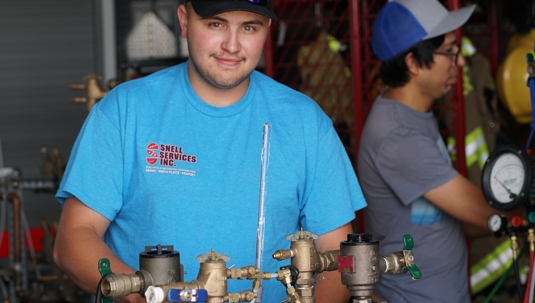
In the vast stretches of Central and Western Nebraska, a crisis is unfolding—not in the fields or the livestock pens, but deep within the infrastructure of our growing communities. While much is said about the digital divide, a more physical and immediate "skills gap" is threatening the future of our construction industry. We are running out of plumbers, and by the year 2030, the shortage of commercial and contract professionals could reach a breaking point that impacts every major building project from Kearney to Gering.
A Workforce in Transition
National labor data paints a sobering picture: nearly one-third of all skilled trade professionals are projected to retire within the next decade. In the plumbing industry specifically, the U.S. Bureau of Labor Statistics expects demand to grow by roughly 4% annually through 2034, yet entry into the field is not keeping pace. Nationally, the industry is forecast to face a shortage of approximately 550,000 plumbers as early as 2026.
In Nebraska, these trends are amplified by our unique geography. While the state boasts a high labor force participation rate of 69.5%—significantly higher than the national average—much of that talent is concentrated in service sectors or moving towards the eastern end of the state. In rural and western regions, the "Silver Tsunami" of retiring Baby Boomers is hitting the trades particularly hard.
"We are seeing a generation of incredible expertise walk out the door into retirement," says Mark Schanou, Human Resources for Snell Services, Inc. "The issue isn’t just the number of bodies; it’s the loss of decades of institutional knowledge that simply isn't being replaced by the current trickle of new apprentices."
The Educational Vacuum

A significant driver of this gap is the lack of local vocational training. In Central and Western Nebraska, the three primary higher education anchors—Central Community College (CCC), Mid-Plains Community College (MPCC) and Western Nebraska Community College (WNCC)—currently lack dedicated, comprehensive plumbing programs. While WNCC offers a broader Construction Technology track that touches on the trade, MPCC and CCC provide only Electrical and HVAC classes; there is no localized "pipeline" specifically for the plumbing license track.
This creates a high barrier to entry. A young person in North Platte or Scottsbluff interested in the trade must often travel to the eastern end of the state or look out-of-state for formal schooling, or rely entirely on finding a contractor willing to manage a multi-year apprenticeship from scratch.
"When our local community colleges lack specific plumbing programs, it sends a subconscious message to students that the trade isn't a priority," Schanou notes. "From an economic standpoint, we are essentially exporting our potential workforce to the eastern end of the state because the infrastructure for their education doesn't exist in their own backyard."
2030 Projections: The Commercial Bottleneck
If current trends persist, the landscape for commercial contractors in 2030 will be defined by "The Great Bottleneck." As older master plumbers exit the workforce, the remaining labor pool will be stretched thin.
This leads to three predictable outcomes:
- Project Delays: National data shows that labor shortages already extend project timelines by an average of two months. By 2030, this could double for complex commercial builds.
- Increased Costs: Scarcity drives wages. While higher pay is a boon for workers, the resulting higher bids may make some essential infrastructure projects in the Sandhills financially unfeasible.
- The "Fix-It" Crisis: Large-scale commercial maintenance (hospitals, schools, and factories) requires specialized knowledge. A shortage of commercial plumbers means preventative maintenance gets deferred, leading to more emergency—and expensive—failures.
"By 2030, the ability to find a contract-grade plumber won't just be a line item on a budget; it will be a competitive advantage," Schanou warns. "Contractors who aren't investing in their own internal training and retention programs today are going to find themselves unable to bid on major projects tomorrow."
Looking Forward
Bridging this gap requires a paradigm shift. We must move away from the "college-only" mindset that has stigmatized the trades for thirty years. Modern plumbing is increasingly high-tech, involving digital diagnostics, medical gas piping, and complex mechanical systems that require sharp minds and technical precision. Addressing the shortage is not just about keeping the water running; it’s about ensuring that Central and Western Nebraska remain places where new businesses can build and existing ones can grow.
About Snell Services, Inc.
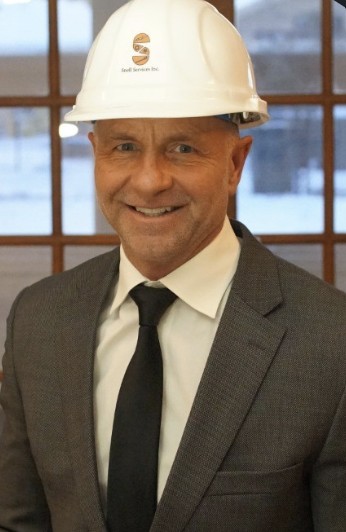
Snell Services, Inc. has been a cornerstone of Nebraska’s construction and service industry since 1941. With locations in Kearney, North Platte, and Gering, Snell provides 24-hour electrical, plumbing, and HVAC services for both residential and commercial customers. Specializing in complex commercial contracting, including sheet metal fabrication, medical gas piping, and fiber optic technology, Snell remains committed to self-performance and investing in the next generation of Nebraska’s skilled workforce.
Mark Schanou serves as the Human Resources lead for Snell Services, Inc., where he oversees workforce development and recruitment across Central and Western Nebraska. He holds a degree in Economics with honors from the University of Nebraska at Kearney (UNK). Leveraging his economic background, Mark is a dedicated advocate for the skilled trades, focusing on bridging the regional skills gap and building sustainable career pathways in the HVAC, electrical, and plumbing industries.